















Skip to content
The WordPress team you don't have to hire.

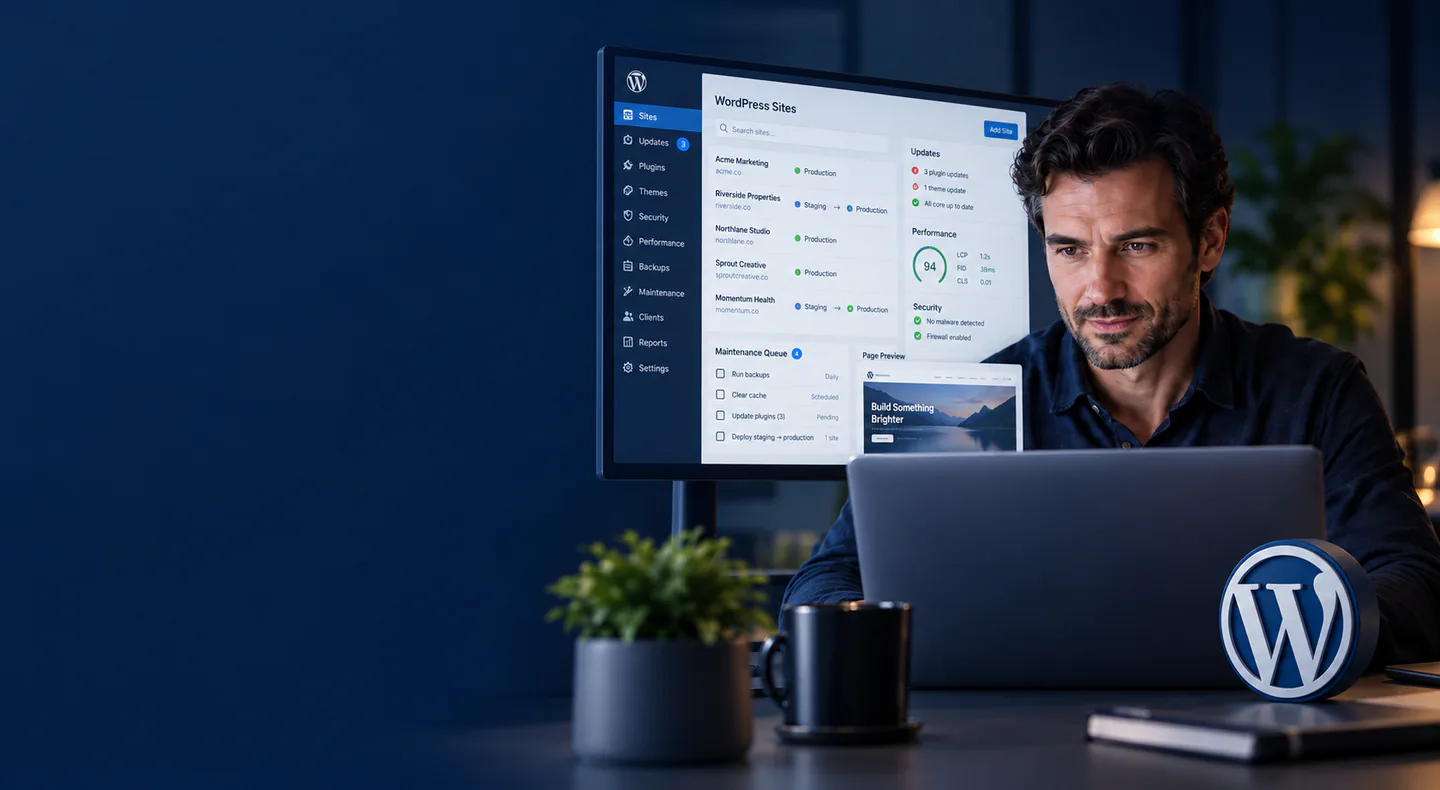
White-label WordPress development
your brand on every build.

Custom themes, plugin development, migrations that don't lose a single row, and maintenance retainers that actually get run, delivered by our engineering team and presented as your agency's work, WooCommerce included. NDA-backed, with the zero-competition clause in the contract.

100+ agency partners · Proposals in 48 hours · Rate card agreed in writing

  • Hello Peter
  • Gruber Logistics
  • Delhivery
  • Thomson Reuters
  • Qatar Airways
  • Grundfos
  • Save
  • BERD
  • Yale University
  • Kuwait Police
  • Dubai Police
  • Panasonic
  • Infosys
  • Kia
  • Hitachi
  • Orange Business Services
In one answer

PixelCrayons delivers WordPress development under partner agencies' brands: custom theme builds, plugin development and customization, migrations and ongoing maintenance and security retainers. Your agency owns the client relationship and the retail price; we deliver behind your logo at wholesale rates, patch and monitor the site on the cadence you set, and report in your templates. NDA at signature, zero-competition in the contract, 12-month post-engagement blackout. 100+ agency partners keep us on their bench; this is one of the disciplines they resell.

The operating record

Judge the record,
not the adjectives.

Outcomes tied to real engagements, not averages.

21 yrs
Years in continuous delivery
100+
Agency partnerships
2,500+
Projects delivered
30+
Countries served
2+ yrs
Average partner retention
14 days
NDA to first deliverable
340%
Revenue growth · 7 months
Client outcome: eCommerce
+127%
Organic traffic · 5 months
Client outcome: SaaS
85%
Faster delivery · zero churn
Client outcome: via agency partner
Clutch — 4.8 / 5 ratingGoodFirms — 4.7 / 5 rating
Google Partner
Meta Business Partner
Shopify Partner
Where the work happens
ShopifyWooCommerceMagentoWordPressWebflowKlaviyoGoogle AdsMeta AdsGA4Next.js
What your agency resells

The WordPress discipline,
sold as yours.

01

Architecture and theme scoping, before any code

Custom post types, the page-builder-or-custom-theme call, hosting and the plugin inventory, decided and written down before the first build ticket. Your agency presents the plan as your own recommendation; we did the reasoning behind it.

Before build
02

Custom theme development, not a stretched template

Themes built to the brief rather than bent from a marketplace purchase, with the templates, custom fields and block patterns your client's content team actually needs. Nothing merges until a second senior engineer signs off against a written standard.

Every merge
03

Plugin development and customization

Where an existing plugin fits, we configure it properly; where it doesn't, we build one. Custom functionality, integrations with your client's CRM or booking system, and WooCommerce storefronts when a brief calls for commerce, though a dedicated eCommerce build runs through our eCommerce development discipline, not this one.

Per brief
04

Migrations without the 2am scramble

Off a legacy CMS, a dated WordPress install, or a host that's outgrown itself, with content, media, redirects and SEO equity carried across deliberately. The migration plan is written down before anything moves, so nothing depends on memory during the cutover window.

Per engagement
05

Maintenance and security retainers that actually get run

Core and plugin updates tested on staging before they touch production, security monitoring, backups verified (not just scheduled), and uptime monitored, with alerts routed to the pod. The retainer report goes out in your templates, so your client sees a supplier that stays on top of things.

Monthly
The build-or-buy decision

Four ways to add WordPress development,
side by side.

Reliability, brand safety, scalability, governance and the costs that don't show up in the quote: the five things that actually decide it when your client's site is on the line.

FreelancerIn-house hireOther white-label vendorsPixelCrayons
ReliabilityGreat until a plugin conflict eats a weekend they don't haveStrong once ramped; a single point of failure on leave or exitVaries by vendor; ask for the named team and who covers leave, in writingA named pod with a second specialist briefed from day one; a named lead and a weekly written report on every engagement
Brand safetyYour client one support-forum post away from knowingSafe: it's genuinely in-houseVaries by vendor; ask for non-solicitation and a blackout, in writingNDA + zero-competition clause + 12-month blackout, in writing
ScalabilityOne person's calendar is the ceiling, and WordPress work is burstyA hiring cycle per step up, severance per step downVaries by vendor; ask how a resize works mid-engagementResize monthly against your pipeline, in both directions
GovernanceWhatever discipline they personally keep, updates includedYours to build and enforceVaries by vendor; ask for the patch schedule and the escalation path, in writingWritten review standard, tested staging updates, documented handover: auditable
Hidden costsYour hours re-briefing every plugin choice and quality-checking mergesSalary through quiet quarters; tools, licences and training on topRework when a core update breaks something nobody tested firstThe wholesale rate is the rate: proposals itemised, no surprise invoices
Bench first, briefs later

On file today,
delivering when you win.

01
Today

Intro call

Thirty minutes on your clients, your margins and where WordPress fits your offer. No pitch deck, no obligation to bring a project.

02
This week

NDA + rate card on file

The capability pack and wholesale WordPress rate card arrive; we sign your NDA. From here you quote theme builds, plugin work or a maintenance retainer in any pitch, months before there's a client. Partner rates are published on agencies.pixelcrayons.com if you want the number first.

03
When a client signs

First branded deliverable

Architecture agreed and the repository standing in your client's own hosting within days; a reviewed, working theme build on staging inside 14 days of the engagement starting. Proposals against the rate card arrive within 48 hours.

04
As you grow

The build pod scales

One client becomes a portfolio; overflow becomes a standing maintenance retainer across every WordPress site you manage. The same pod stays on your accounts, and the average partnership runs past two years.

Inside Prism

Your engagements, week to week,
in Prism as well.

Agency engagements run in Prism too: a workspace per engagement, client names withheld, holding your requests, approvals, tasks and the weekly review.

  • 01

    A workspace per engagement

    Client names withheld throughout.

  • 02

    Your requests and approvals

    Brief us, approve work, see who owns what.

  • 03

    Weekly review

    Each decision recorded, with the expectation attached.

How we report it, in Prism

The delivery record,
you can read without a stand-up.

What you receive in month one

Development is reported as artefacts in your own tools, not a status call. In the first month you receive the technical audit of the current codebase, the delivery plan broken into reviewed increments with acceptance criteria, and the environment map showing where code runs and who can deploy it. The weekly review in Prism lists what merged, what was reviewed, and what is blocked and by whom.

  • 01Technical audit: the current codebase, its risks, and the order of fixes
  • 02Delivery plan: increments with acceptance criteria and review owners
  • 03Environment map: development, staging and production, and who deploys
  • 04Weekly review in Prism: merged, in review, blocked, and the reason for each block
  • 05Definition of done: tests, review, accessibility and performance checks per increment

Related workD2C fragrance retailer: a replatform, delivered white-label.Commerce · Gulf · A different discipline, so it is linked here rather than presented as proof of this one.

Where this fits

The partnership, the discipline, the lane.

The wholesale band for WordPress is on the pricing page, agency view on: quote against it before a client asks. The partnership itself lives on the agency hub; WordPress as brands buy it direct has its own page.

Questions

Frequently
asked.

For bench partners, fast: the NDA is signed and the rate card is on file before there's a project, so when your client says yes, a proposal lands within 48 hours and a reviewed, working theme build is on staging inside 14 days. The first fortnight typically prioritises the plugin inventory and the hosting handover into your client's own accounts: the foundation everything after it is built on.

Custom themes built to the brief, page-builder sites (Elementor and similar) where that's the right fit for a client's editorial team, headless WordPress where the front end needs to live elsewhere, and multisite where an agency is managing a network of client properties on one install. We tell you which approach fits before we start, not after.

Both, depending on the brief. Where a well-maintained plugin covers the need, we configure and harden it rather than reinvent it. Where the requirement is genuinely custom (a booking flow, a client-specific integration, a data structure no marketplace plugin models correctly) we build the plugin, documented and versioned like any other part of the codebase.

On a maintenance retainer, updates are tested on a staging copy before they ever touch production, with a rollback path agreed in advance. Security monitoring and backup verification run on a set cadence, not just a scheduled job nobody checks. Plugin conflicts get diagnosed and fixed rather than papered over with a workaround that breaks again next update.

Yes, as part of a WordPress engagement: many partner briefs are a WooCommerce storefront alongside the rest of the site, and we build and maintain those under this same rate card. A dedicated, commerce-first build with deeper platform architecture work runs through our eCommerce development discipline instead; we'll tell you which lane a brief actually needs.

Your client's, always. The hosting account, repository and staging environment are created in your client's own accounts from day one, and IP assignment is in the contract. If either of us ever exits the picture, nothing is held hostage: your client owns everything, documented, and a proper handover explains how it works.

That's your call, not ours. Some partners describe us as their delivery team; others say nothing about who's behind a build. Either works, because our name appears on no theme credit, no plugin readme and no report your client ever sees. What's contractual from our side is fixed: we never contact your client, never accept work from them directly, and the disclosure duty runs the other way: if your client ever approaches us, we tell you and decline.

An in-house hire is strong once ramped, but it is a single point of failure on leave or exit. It also means salary through quiet quarters and a hiring cycle per step up, while WordPress work is bursty. A white-label partner resizes monthly against your pipeline, in both directions. You get a named pod, a written review standard and updates tested on staging, all under your brand and an NDA.

The wholesale WordPress rate card is agreed once, in writing, and every engagement is quoted against it. Quoting a theme build, a migration or a maintenance retainer never means renegotiating per client. You set the retail price and keep the margin; we never see your client invoices, and nothing in a build or report reveals what you pay us. Proposals are itemised by deliverable (theme build, plugin work, migration, maintenance retainer), so a plugin licence or a security patch shows up as its own line rather than getting buried in the retainer fee, with no markups on either hiding in the middle. See the partner rates on agencies.pixelcrayons.com.

Add WordPress development to your rate card
this week.

Get the wholesale WordPress rate card, the capability pack and an NDA on file today, so the next theme build, migration or maintenance retainer walks in already priced. No project needed, no fee to join.

No project needed · NDA standard · Zero-competition in writing

Last updated

May we run analytics (Google Analytics via Google Tag Manager) to see which pages are useful? Nothing loads unless you accept, and declining means no analytics script runs at all. No advertising cookies either way. Cookie policy · Privacy policy