















Skip to content

YouTube SEO:
found in search, not just uploaded.

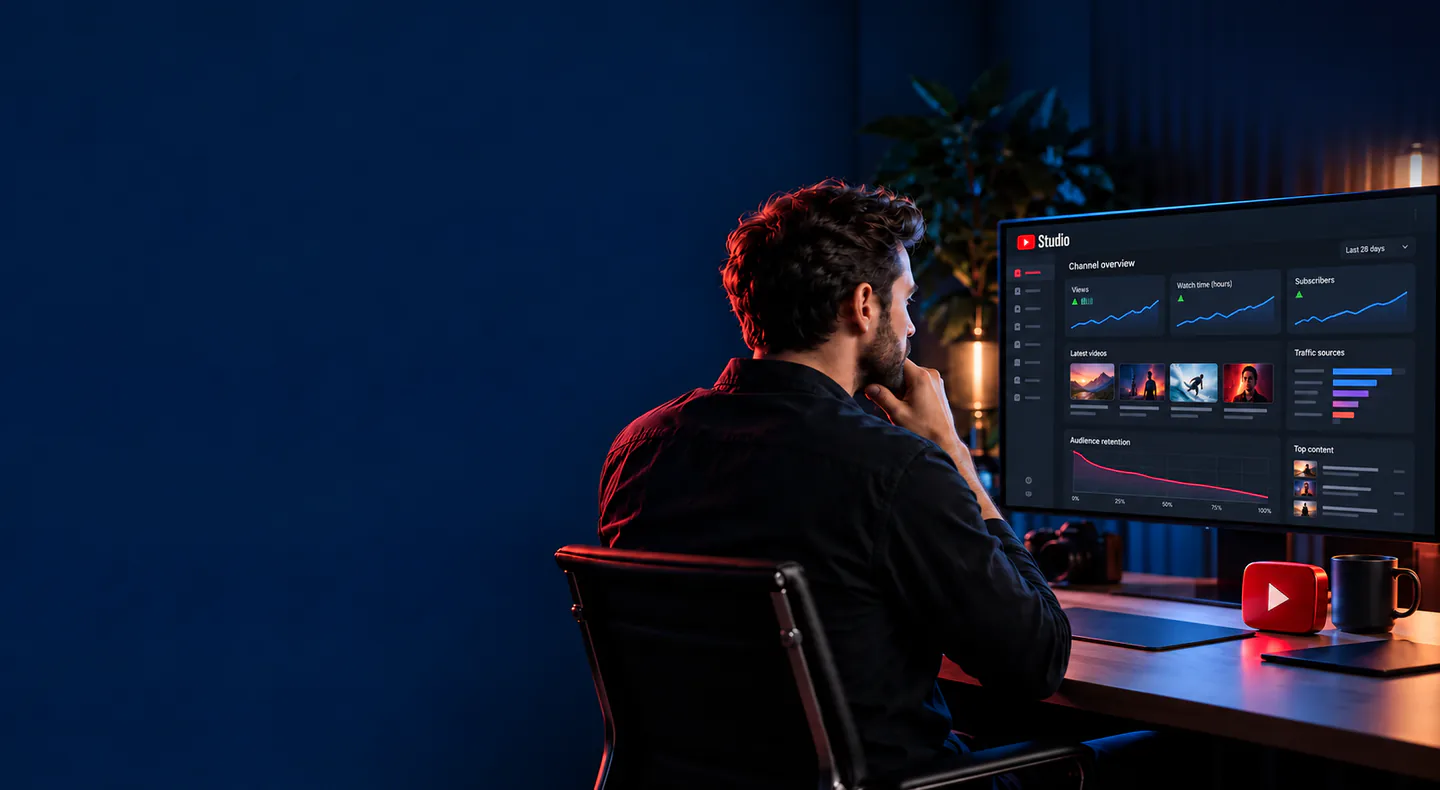
Uploading a video is not the same as it being found. We optimise the titles, descriptions, tags, thumbnails, chapters and captions that decide whether YouTube and Google surface it, and structure videos so people actually keep watching once they click.

Review in 48 hours · Search and discoverability, not ads

  • Hello Peter
  • Gruber Logistics
  • Delhivery
  • Thomson Reuters
  • Qatar Airways
  • Grundfos
  • Save
  • BERD
  • Yale University
  • Kuwait Police
  • Dubai Police
  • Panasonic
  • Infosys
  • Kia
  • Hitachi
  • Orange Business Services
In one answer

YouTube SEO is optimising a channel and its videos, not the strategy of what to make: titles, descriptions, tags, thumbnails, chapters and captions, so YouTube's and Google's search and recommendation systems can find, understand and surface them. The work covers metadata, thumbnail testing, retention-focused structuring, playlists and channel organisation, and accessibility signals like closed captions. It stops at discoverability: content strategy, community growth and YouTube ads live on a separate, broader page.

The operating record

Judge the record,
not the adjectives.

Outcomes tied to real engagements, not averages.

21 yrs
Years in continuous delivery
100+
Agency partnerships
2,500+
Projects delivered
30+
Countries served
2+ yrs
Average partner retention
14 days
NDA to first deliverable
340%
Revenue growth · 7 months
Client outcome: eCommerce
+127%
Organic traffic · 5 months
Client outcome: SaaS
85%
Faster delivery · zero churn
Client outcome: via agency partner
Clutch — 4.8 / 5 ratingGoodFirms — 4.7 / 5 rating
Google Partner
Meta Business Partner
Shopify Partner
Where the work happens
ShopifyWooCommerceMagentoWordPressWebflowKlaviyoGoogle AdsMeta AdsGA4Next.js
Every upload, in writing

What the engagement
actually buys.

01

Keyword-to-topic research for video search intent

The queries people actually type into YouTube and Google before a video ever exists: what they're trying to learn or decide, and which format (a tutorial, a comparison, a walkthrough) answers it. Topics are mapped to titles before a script is written, so the channel is built to be searched for, not just watched by whoever already follows it.

First
02

On-video metadata optimisation

Titles that match how people search rather than how the team talks internally, descriptions that front-load the answer and the right keywords, tags that describe the topic accurately, and chapters that mark the exact moment a query gets answered. Done to every video that ships, not a one-off pass on the back catalogue.

Ongoing
03

Thumbnail and click-through optimisation

A thumbnail earns the click once the title has earned the impression. Thumbnails are tested against alternatives, checked for legibility at phone size, and kept accurate: no misleading stills that spike a click and tank the average watch time behind it, which YouTube also reads as a signal.

Ongoing
04

Watch-time and retention-focused structuring

Length, pacing and the first fifteen seconds are planned around where viewers actually drop off, since watch time and retention are what YouTube's own systems weigh most heavily when deciding who to recommend a video to next. Structure is set before filming, not patched in the edit.

Per video
05

Playlist, channel-level SEO and captions

Playlists organised around search topics rather than upload date, a channel description and sections that state what the channel covers, and closed captions uploaded (not left to auto-generation alone), which both help accessibility and give search systems a clean transcript to read.

Ongoing
First 30 days

Audit to
findable, video by video.

01
Days 1 to 2

Channel and video audit

Every published video's titles, descriptions, tags, thumbnails and captions reviewed, plus playlist structure and channel metadata, so the starting point is recorded rather than assumed.

02
Week 1

Topic map and fix list

A prioritised map of search topics the channel should be found for, alongside the specific metadata, thumbnail and caption fixes worth making first, approved by you before anything changes.

03
Weeks 2 to 4

Metadata and captions live

Titles, descriptions, tags and chapters rewritten on the highest-opportunity videos, thumbnails tested, and closed captions uploaded across the priority set.

04
Month 2+

Structure, test, report

New uploads are planned against the topic map from the outset, thumbnails keep being tested, and a monthly report shows what changed in search visibility, tied to the videos it affected, not a vanity view count.

Inside Prism

Your engagement, week to week,
in one workspace.

Your search programme runs in a Prism workspace you log into: the fix queue, the content queue, approvals and the weekly review, with each decision written down as it is made.

  • 01

    Fix and content queues

    Approvals with an owner and a due date.

  • 02

    Weekly review

    Each decision written down as it is made.

  • 03

    Actions checked against outcome

    What we did and what happened, side by side.

Proof

The search foundation,
before a title is written.

Fragrance merchandiser arranging an unbranded perfume collection in a Gulf-region studio
Commerce · Gulf
Via agency partner · white-label

D2C fragrance retailer: the foundations video search also needs.

No YouTube programme appears in the published record, and none is claimed here. What the record shows is the search foundation that video SEO leans on too: a migration that kept the catalogue and order history intact, and organic visibility rebuilt on real buying demand rather than guesswork, with weekly reporting tied to revenue. Revenue grew 340% in seven months. A YouTube SEO programme through us starts on that same footing, with the topics and search intent mapped before a single title is written.

340%
Revenue
7 mo
Elapsed
Read the full case
Questions

Frequently
asked.

Often, yes, though the mechanism is specific rather than magic. Google surfaces YouTube videos directly in search results and in AI-generated answers when a video genuinely answers the query better than a page would, such as a visual how-to or a demonstration. Well-optimised metadata, accurate titles and uploaded captions (which give search systems a clean transcript to read) all make that more likely. What we don't do is promise a specific Google ranking as a result of video work: it depends on the query, the competition and whether video is the right format for it at all, which the audit will state plainly.

Deliberately narrow, and worth being precise about. This page covers making existing and planned videos findable: metadata, thumbnails, retention structure, playlists and captions. It does not cover what to film, how to build a community, working with creators, or running YouTube ad campaigns. That broader growth and content strategy work, ads included, lives on a separate page, YouTube Marketing, run by a different specialism inside the same team. If you need the full picture rather than just search and discoverability, that's the page to read next.

No, and no honest YouTube SEO expert does. YouTube's and Google's ranking and recommendation systems weigh viewer behaviour (watch time, retention, click-through) alongside metadata, and nobody outside those companies controls the algorithm or can promise a number it produces. What we commit to is the work we control: research-backed titles and descriptions, tested thumbnails, retention-focused structure, complete captions and organised playlists, reported against search visibility and watch-time trends rather than promises.

Both, and they're not in tension. Captions make a video usable for deaf and hard-of-hearing viewers and for anyone watching with the sound off, which is a real share of mobile viewing. They also give YouTube's and Google's search systems an accurate transcript of what the video says, rather than a guess from auto-generated captions, which measurably improves how well a video matches a search query. We upload proper captions rather than leaving auto-captioning as the only option, on every video in scope.

No, it extends it onto a format your existing search work doesn't cover. Technical SEO and content strategy keep your website's crawlability and topical authority in order; this page applies the same search-intent thinking to a channel and its videos. Run together, a query that's better answered by a video and one better answered by a page point back to the same topic map instead of two disconnected efforts.

It depends on how many videos are in scope and whether the channel needs a back-catalogue pass or ongoing optimisation on new uploads only. Every proposal itemises the deliverables (research, metadata, thumbnails, captions, playlists, reporting), priced within 48 hours of the first call, so you compare deliverables, not vague hours.

Find out why your videos
aren't the ones people find.

A free YouTube SEO review in 48 hours: metadata, thumbnails, captions and playlist structure checked against real search intent, with the fix list ranked by impact. Keep it either way.

48-hour turnaround · No retainer required · NDA standard

Last updated

May we run analytics (Google Analytics via Google Tag Manager) to see which pages are useful? Nothing loads unless you accept, and declining means no analytics script runs at all. No advertising cookies either way. Cookie policy · Privacy policy